


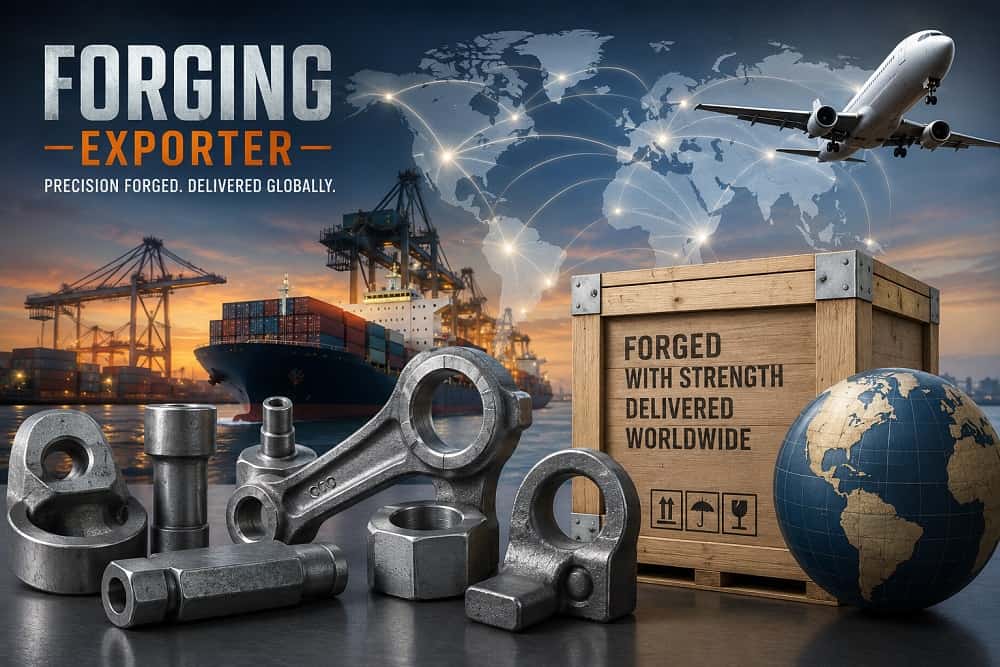
Forging suppliers produces forged parts or components in their forging units as per unique industrial requirements. Some of their manufactured are utilized within country, some are stored in warehouse for future use within country and rest of them are exported to foreign countries. A forging exporter in India ensures that every forged components that are manufactured by the forging suppliers comply with the international trade agreement and comply with the industrial quality standards.
There is huge potential export opportunity for forging exporter in India. Not every nation has port facility like we have, availability of the raw materials required for forging industry set up. That is why Indian government should encourage these forging exporter in India for reducing their financial burden by offering them low interest rate business loans, grants or and making efforts in reducing their tax or tariffs.
How forging exporters in India can increase production capacity?
By making use of modern forging machines that consumes less electricity and is capable of handling complicated forging tasks in less time we can scale up the production capacity of the forging units in India. For this Indian forging business owners should invest in industrial applications that uses advanced technologies like Computer Numerical Control (CNC) systems for measuring the forging parameters and quality testing of forged material.
Using CNC controlled hydraulic press brake machines, automated forging machines that uses cutting edge technologies like artificial intelligence, internet of things, and ai scanning can help us in identifying forging defects in the forging units so that their risks that causes that manufacturing defect can be mitigated easily without hampering the production quality.
Challenges faced by forging exporters in India
The demand of the forged products is increasing rapidly however the growth and development of the forging industries are not as per government expectations. The failure of the provisions of business loan has increased the financial burden of the business owners, increasing tariffs on forged components by other countries have made the condition even worst. The government take initiatives like Make in India, Vocal to global and organized several trade fair for increasing foreign investments. There is delay in the supply due to unavailability of essential raw materials in forging units due to limited financial resources.
Finding the best forging exporter in India
It is recommended that we must check the official website of forging exporter India, check their industrial certification, compliance with international quality standards for trade agreements, and after sales, support or maintenance services they offer or warranty of the forged products or quality assurance certificate they provide. For finding the best forging exporter in India we can check online google my business profiles and evaluate the forging company profile ratings, and reviews given by customers. We can also check business directory website to view their product or service features in their listing. It helps us in gathering more information about the company.
Conclusion
The prospects for India’s forging industry in the global market are bright when it comes to good manufacturing practices, technological innovations, and compliance with quality standards. Using energy-efficient forge equipment, CNC automation, AI quality inspections, and smart manufacturing methods, forge exporters can heighten productivity and minimize defects while staying competitive globally. In line with this, government policies promoting and facilitating access to finances, offering attractive export incentives and developed infrastructure, as well as reducing trade barriers, make the growth of exports even faster.
When choosing reliable forge exporters, companies should check their certifications, manufacturing abilities, product quality, export experience, and reputation among customers.
